
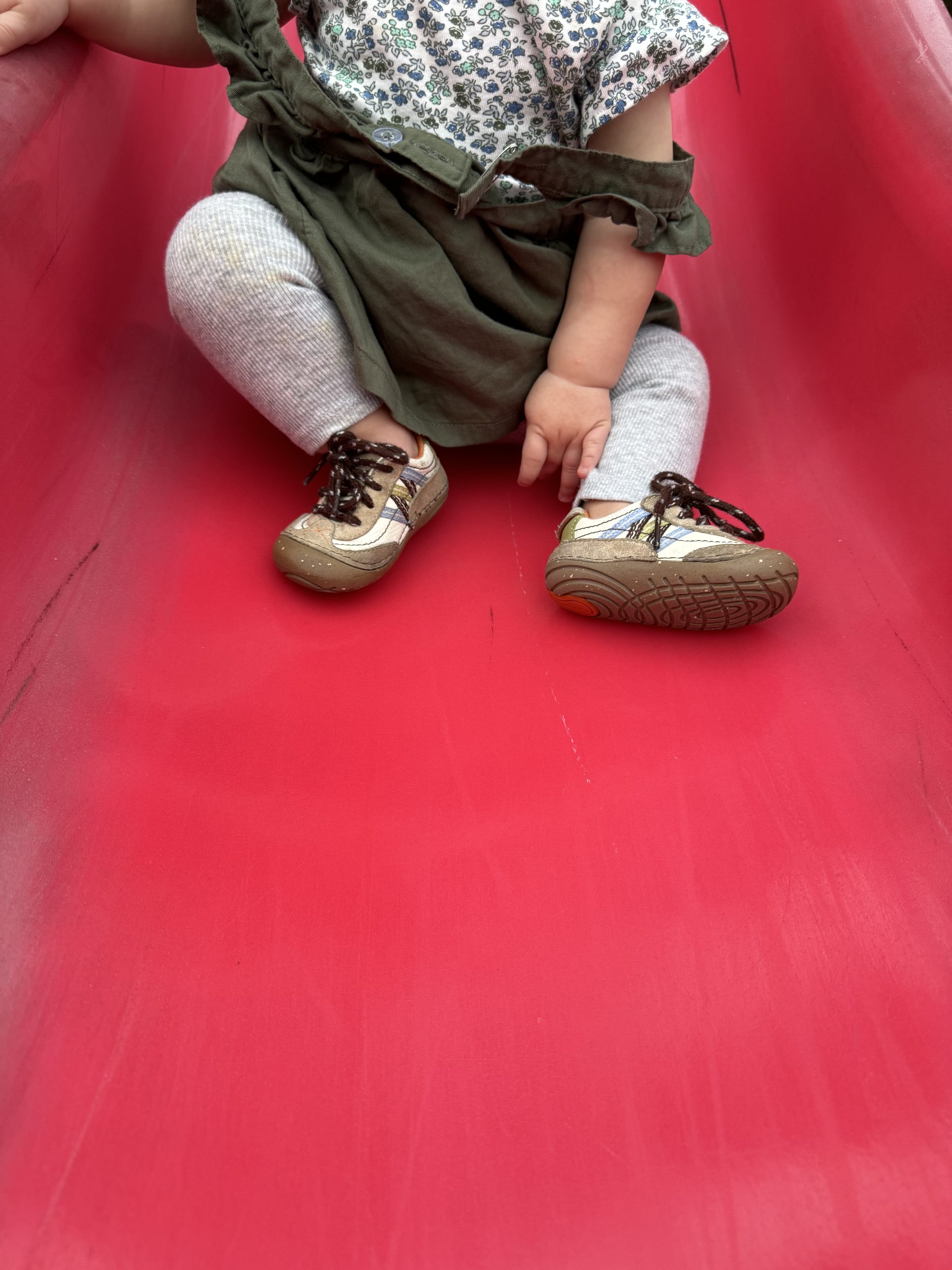
Advertised as the perfect first shoe for young toddlers, I have some major beef with sock shoes for new walker as a pediatric physical therapist and mom.
Let’s take a look at the selling points versus reality.
The draw
Versus where it breaks down
1. Advertised as wide toe box:
The beef
A lot of sock shoes do have wide toe boxes, which I appreciate.
Unfortunately, that is not the only box to check when looking for good first walker shoes.
(As an Amazon associate and brand affiliate, I may earn a small commission at no additional cost to you for linked items. Thanks for support this page!)
With a poor overall structure and a soft heel cup that completely folds to any pressure, sock shoes are just in the way.
2. Easy to pull on:
The beef
I would argue that with easy to pull on also comes easy to pull off.
But beyond toddler shoe drama, this loose top with no adjustability is my biggest issue with sock shoes on a developing foot.
The top sock part is not sturdy enough to snuggly hold the foot- at least for long.
What ends up happening with wear:
The foot is sloshing and sliding around inside the flexible top.
1 of 2 things happens as a result:
- Either Baby ends constantly gripping with their toes in an attempt to keep the shoe in place.
- Baby ends up standing on the inside or outside edges of the foot.
3. Flexible
Yep- they are flexible.
Way, way too flexible to do anything we need a shoe to do.
What we want instead:
A semi-flexible shoe that bends to allow a heel-toe gait pattern but does not fully fold in half.
4. Barefoot like
I’m all for a shoe that mimics a barefoot mechanic, but low-profile does not mean it has the same benefits as being barefoot. Even in a minimalistic, barefoot shoe, I want to check the good-shoes boxes.
Here is my rule of thumb with shoes:
Skip them as much as you can to opt for true barefoot time, but if you are going to put a shoe on, make it a good one.
4. Cheap/ low cost option for changing foot
I appreciate this so much and will always hunt for a good deal, especially for a changing shoe size. (And there are several great, affordable toddler shoes out there.)
I have an overall shifted mindset when it comes to kid’s shoes though:
I like to think of good shoes as an investment in the long-term shape of the foot.
A baby’s foot is mostly cartilage, gradually ossifying into bone in the teenage years. In new walkers, all of the surrounding muscles are still developing strength. Even at age 3, the foot’s arch is just starting to be visible.
The foot is physically shaped by the forces put through it. A shoe that promotes a nice, neutral alignment of the heel, adaptability through the midfoot, and splay through the toes matters, especially for growing feet.

What is your experience with sock shoes? Let me know below or feel free to send in any shoe related questions.
If you need some options, here are lists I put together for New Walkers and for Toddler Shoes.

Read Next: For more on what to look for in a toddler shoe to support healthy foot development, check out the PT Approved Best Toddler Shoes article.
Share this Blog


Latest on the Blog


