
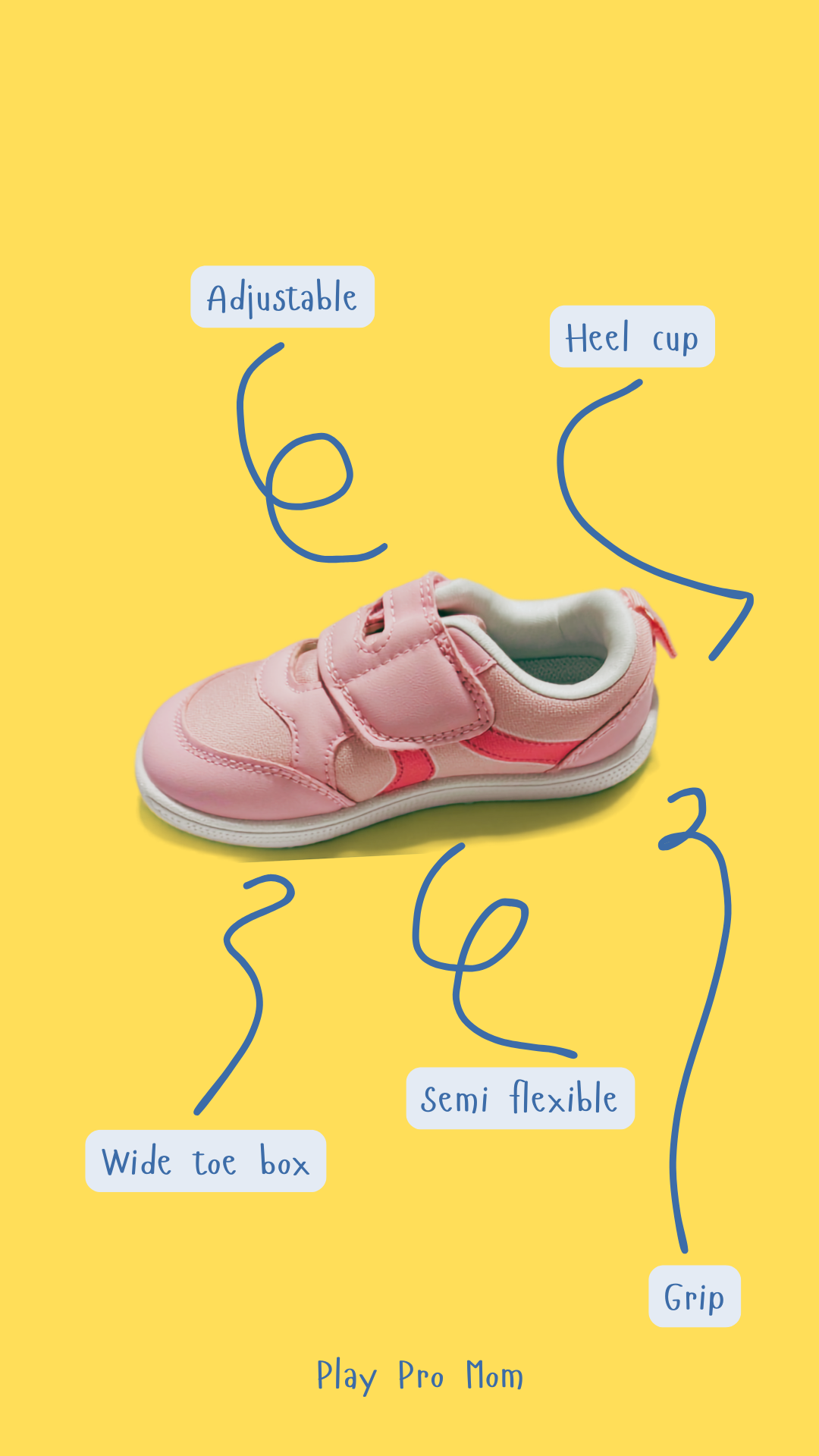
PT approved toddler shoes have these 5 things in common to support a child’s healthy foot development
Arguably more so than in adults, good footwear in childhood matters. A toddler’s foot is mostly cartilage with the bones and arch still forming. This foot shaping happens based on the way a toddler stands and walks, inside and outside of shoes.
I put together a list of PT approved Toddler Shoes if you want to see examples of shoes that check all of the boxes.
(As an Amazon associate, I may earn a small commission from linked items at no additional cost to you.)
When looking for the best shoes for toddlers foot development, these are the top 5 things I look for as a pediatric physical therapist and why it matters for your little one’s growing foot:

1. Heel Cup
This is the part at the back of the shoe that surrounds the heel below the ankle. It’s the deal breaker or maker on most shoes for me.
I look for a firmer heel cup that cannot be fully pinched in half.
Finding a heel cup at all in a summer shoe can be extra tricky- these are my go to choice for summer.
For a dressier option, I love these for boys or girls.
Why it matters
- We want the calcaneus (bone at the back, base of the ankle) upright– not tilted in or out.
- A true heel cup captures the calcaneus to control side to side instability.
2. Adjustable
Laces or a strap across the top at the base of the ankle
Why it matters
- This keeps the body of the shoe from sloshing and sliding around the foot.
- An anchored fit = less toe gripping
Toe gripping is a compensation that contributes to ankle tightness and delayed balance reactions.
3. Wide Toe Box
The front part of the shoe that houses the toes should be more box shape and less triangle shaped.
Why it matters
- We want room for all of the toes to naturally splay out.
- This allows better balance, circulation, and alignment through foot.
See a good example of a wide toe box toddler shoe here.
4. Semi-Flexible
The sole of the shoe should bend into a rocker shape when squeezed heel towards toe.
However, the shoe should not be so flexible that you can fully fold the it in half.
Why it matters
- Sturdy enough to support good alignment and protect the sole of the foot during active play.
- Flexible enough to allow a mature, heel-toe pattern gait (walking) pattern and adaptability to the shape of the ground.
5. Grip & Tread
For everyday play shoes, I like to see a rubberized tread on the bottom of the shoe.
Why it matters
- This allows our little ones enough grip to run, play, climb, and explore safely.

Check my PT approved Toddler Shoe list for examples of what to look for in a toddler shoe that supports healthy foot development.
I update it seasonally with new styles.
Next read: Why I do not recommend sock shoes as a pediatric physical therapist
Share this Blog:


Latest on the Blog


